Tiny crest, huge personality
Meet the Cockatiel
a.k.a. the Weiro
Pocket-sized parrots from the Australian outback with bright orange cheeks, a mood-reading crest, and a whistle they'll happily teach you.
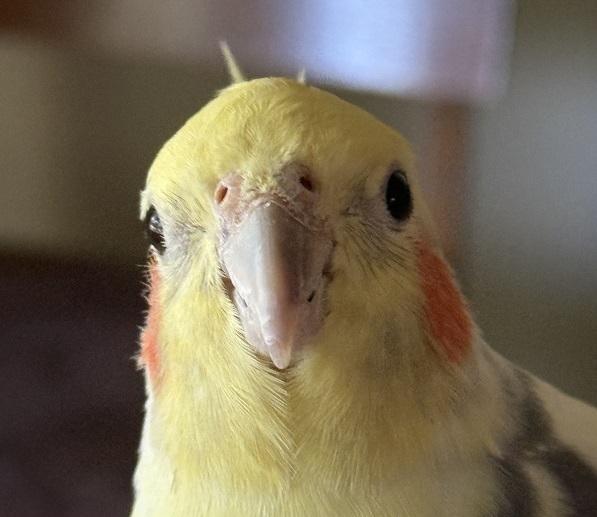
What is a cockatiel?
The smallest member of the cockatoo family - and one of the most beloved pet birds in the world.
Cockatiels (Nymphicus hollandicus) are native to the arid interior of Australia, where flocks roam in search of seed and water. Australians affectionately call them "weiros" (or "quarrions").
They're famous for their expressive crest - the feathery mohawk on top of their head that rises and falls with their mood - and for the round orange cheek patches that make them look perpetually delighted.
With good care a cockatiel can live 15–25 years, so welcoming one home is a genuine long-term friendship, not a passing pet.
Quick facts
The cockatiel cheat-sheet.
-
Lifespan
15–25 years with good care
-
Origin
Native to inland Australia
-
Size
About 30–33 cm (12–13 in) tip to tail
-
Voice
Champion whistlers - males especially
-
Crest
A built-in mood meter
-
Weight
Roughly 80–120 grams
Caring for your weiro
Happy cockatiels need space, sleep, and lots of company.
- Roomy cage: bigger is always better - at minimum 60×40×50 cm, with horizontal bars for climbing and plenty of out-of-cage time daily.
- Varied perches: natural wood branches of different diameters keep feet healthy. Skip sandpaper perches.
- Real sleep: 10–12 hours of quiet, dark sleep each night. A cage cover helps.
- Daily company: cockatiels are flock animals and bond closely - they need hours of interaction or a feathered friend.
- Enrichment: rotate toys, foraging puzzles, and shreddables to fight boredom.
- Avian vet: find a bird-savvy vet and watch for fluffed-up, quiet, or "puffed all day" birds - illness is often hidden until late.
What's on the menu?
A balanced diet keeps that crest perky and those feathers shiny.
Aim for a base of pelleted food rounded out with fresh veggies and a little seed as a treat. An all-seed diet is like living on chips - tasty but unhealthy. Always provide fresh, clean water daily.
Great to offer
- Quality pellets (the daily base)
- Leafy greens: kale, spinach, dandelion
- Veg: carrot, broccoli, capsicum, peas, corn
- Fruit in moderation: apple (no seeds), berries, melon
- Cooked egg & cooked grains as occasional protein
- A small daily portion of millet/seed as treats
Never feed
- Avocado - toxic to birds
- Chocolate & cocoa
- Caffeine (coffee, tea, energy drinks)
- Alcohol
- Onion & garlic
- Fruit pits & apple seeds
- Salty, sugary, or fried human snacks
Reading the crest
Cockatiels wear their feelings on their heads.
👑 Crest straight up
Alert, curious, or startled - something just grabbed their attention.
🙂 Crest gently angled
Relaxed and content. This is your happy, comfy bird.
😠 Crest flat & hissing
Scared or annoyed - give them space. A hiss is a polite "back off."
🎶 Whistling & singing
Usually males showing off. Many learn tunes, wolf-whistles, and even a few words.
❤️ "Heart wings"
Wings held slightly out in a heart shape - often a content, showing-off male.
A rainbow of mutations
Selective breeding has produced dozens of gorgeous color varieties.
-
Grey
The classic wild-type look.
-
Lutino
Creamy white-yellow with red eyes.
-
Pied
Patchy mix of grey and yellow.
-
Pearl
Lacy, scalloped feather pattern.
Frequently asked questions
The things new cockatiel parents always wonder.
Do cockatiels talk?
Some do! They're better whistlers than talkers, and males are far more likely to mimic words and tunes. Even a "talking" cockatiel usually has a small, charming vocabulary - think a few words plus a killer wolf-whistle.
How can I tell male from female?
In the classic grey, adult males tend to have a brighter yellow face and cleaner grey, while females keep barring under the tail and on the wings. Behavior helps too - males whistle and "sing" more. For many mutations the only sure way is a DNA test.
Should I get one cockatiel or two?
Cockatiels are flock birds and need lots of social time. A single bird can be wonderfully bonded to you - but only if you can give it daily hours of attention. If you're often out, a pair will keep each other company (just know a strongly bonded pair may bond less to you).
Are cockatiels loud?
They're moderate as parrots go - far quieter than a conure or cockatoo. Expect cheerful whistling and "flock calls," plus a loud morning and evening chorus. Most apartments can happily host one.
Do they need a friend while I'm at work?
They appreciate company, but a second bird isn't mandatory if you spend quality time together daily. Foraging toys, a radio, and a view of the household all help a solo bird stay happy until you're home.